
Puppies
Prospective OwnersWelcome
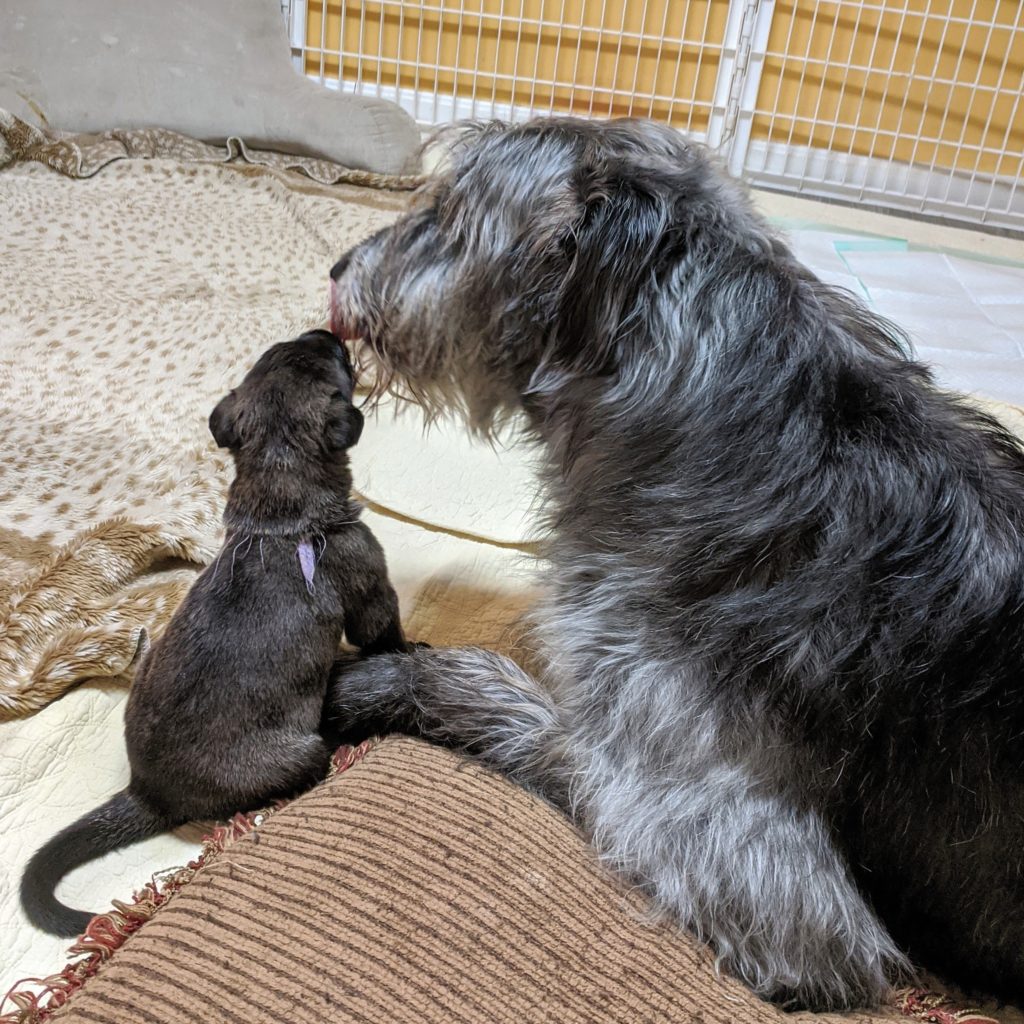
So you’ve decided to welcome an Irish Wolfhound into your life?
You know you want to bring home the best Irish Wolfhound puppy you can, but you’re not sure where to start. How do you find the right breeder? What do you need to know before you bring your puppy home? What should you expect in the puppy’s first year?
IWANE is here to help you navigate through these and other questions!
Step One
Finding a Breeder
A good place to start in meeting a breeder is to attend a local specialty show. IWANE has key people identified at our specialty shows to answer questions and welcome new people to the event and can easily direct you to an available breeder.
Most breeders will be delighted to talk about their breeding programs and their hounds — you can get a lot of information without even asking a question! Breeders allow visitors to meet the puppies and offer playful, stimulating activities that help with socialization.
Questions to Ask Your Breeder
- How long have you been in the breed, and what activities do you and your hounds participate in?
- What is the longevity of your breeding lines, and how do you care for hounds from puppy to adult?
- How are puppies socialized, and when can visitors meet the litter?
- Is liver shunt testing performed? (Breeders test at 9 weeks of age.)
- At what age will puppies be released to new homes? (Most wait 10–12 weeks.)
Liver shunt testing is a must — responsible breeders test at 9 weeks of age. Most will not release puppies before 10 weeks, and many wait as long as 12. Irish Wolfhound puppies need to mature and socialize longer with their mother and littermates than other breeds.
Step Two
Bringing Your Puppy Home
You’ll want to ask about AKC documentation, health history, feeding instructions and vaccine schedule that you will need when taking your puppy home. Most breeders will provide all of this along with some puppy food for their first few days in your new home.
What to Bring Home from Your Breeder
- AKC registration documentation
- Full health history and vet records
- Vaccine schedule to date
- Feeding instructions and puppy food for the first few days
Costs to Consider
- Purchase price (varies by region and breeder)
- Veterinary care — Irish Wolfhounds have specific health needs throughout their lives
- Weight-based medications and vaccinations, which can be significantly more expensive
- Food costs as they grow into one of the largest breeds
- A large vehicle capable of safely transporting them
“Once you have an Irish Wolfhound in your life you learn how special of a creature they truly are, and whose time in your heart will far outnumber its days on Earth.”
Health & Development
Growth & Exercise of Irish Wolfhound Puppies
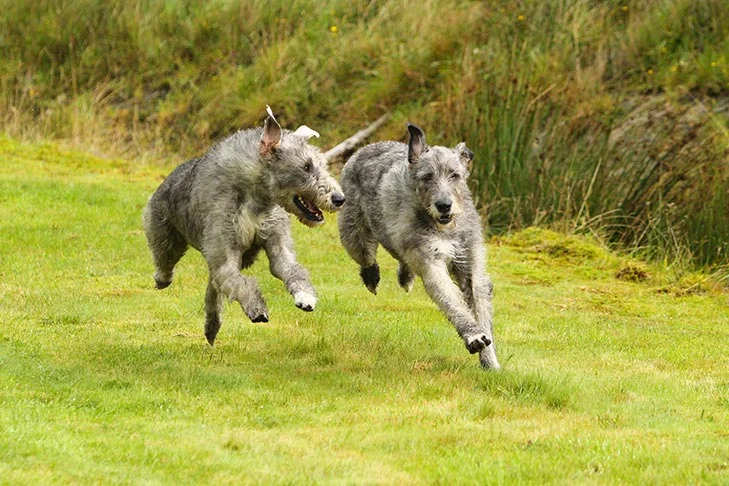
There is a balance between necessary and excessive exercise in young giant breed dogs. Too little exercise prevents proper development of their musculoskeletal system, and too much or too forceful can damage these same tissues. Free play in areas that allow them to gallop at will is all they really need.
They should be prevented from running with adult IWs except in limited, supervised situations. Jogging, jumping, and long leash walks can cause growth issues. They enter a fast growth stage between four and nine months — OCD lesions are more likely to occur at this stage if they experience trauma or bone injury. Let them grow slowly and safely until their growth plates close.
Assess their abilities on an individual basis and always prioritize long-term health over short-term activity.